
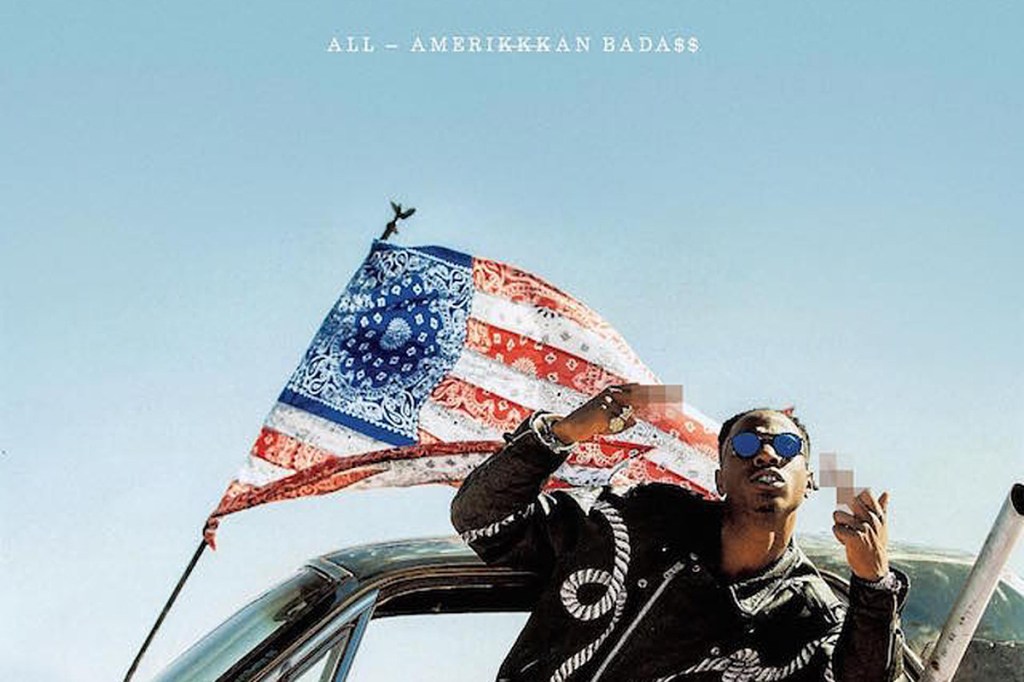
The atrocity that is America over the last few weeks has brought me to a very introspective mind state. I have thought a lot about race. I have pondered my identity. And my mind has struggled to come to terms with the world’s current state and my place within it. So, as I often do, I turn to music. And the album that I can’t stop playing is Joey Bada$$’s All-Amerikkan Bada$$.
Released on April 7, 2017, the second album by the New York native is an uplifting anthem for the black revolution that opens the conversation on a variety of topics. Considering the recent protests and outrage over the treatment of black people in America, the album feels more relevant than ever. AABA is a young black man’s perspective in a cold world of systematic oppression and police brutality.
When it was released three years ago, Pitchfork called the album under cooked and a basic understanding of black plight. The review had it wrong. The album is not supposed to be an encyclopedic knowledge of black injustice. It’s supposed to be an introduction to the black person’s experience. It’s aimed for people who still don’t understand what white privilege is or that it exists. It’s aimed at people who still need an elementary style lesson about racial injustice.
For me, a half-black and half-white male, it’s a perspective that can still be difficult for me to connect and understand. I have brown skin. So, in theory, I’m subjected to the same systematic oppression and negative serotypes as any black man. However, my name is Joshua; it’s not Keyshawn or Jamal. I was raised in an all-white household, and it shows in my speech and my demeanor. I was born in Colorado Springs, Colorado, not exactly a hotbed for blatant racism. While it would be ignorant to think the town has no racism, But in my 23 years of living in the city, I can honestly tell you I never felt slighted.
So, as I sit back and take in the protests and the anger that the black community is feeling, I ponder my place within society. I have researched how the patriarchal white society has subverted the black community. But I am far from an expert.
When I hear the young black girl plead for equality on the sample of “temptation” I feel the pain in her voice. As I listen to the album, the picture of the black experience is explicitly written on the wall. Why you can’t recognize my stride?/Always gotta minimize my pride/Always gon’ criticize my moods/I can’t make one mistake, it’s no room, Joey raps on “Y U Don’t Love Me.”
There are many moments from this album that allowed me to reevaluate my understanding of oppression and the black experience. “Devestated,” “For My People” and “Land of the Free” echo sentiments of hope and prosperity into the first half of the album. Joey quickly brings oppression against the black community to the forefront of the album’s focus. While the back end closes with some of the rugged lyrical hip-hop acrobats that first brought attention to Joey Bada$$ and the Pro Era crew.
The saddest part about this being released over three years ago is it’s timeliness to the present moment. On the closing track “Amerkkan Idol,” Joey sounds like a prophet as he speaks on the rising racial tensions after the police murdering Alton Sterling.
With all of the conflict of propaganda, I believe they are simply tryna slander/Start a Civil War within the USA amongst black and white and those alike/They are simply pushin’ us to our limit so that we can all get together and get with it/They want us to rebel, so that it makes easier for them to kill us and put us in jails/Alton Sterlings are happenin’ every day in this country and around the world.
So, I thank Joey and other artists that are telling their truths and perspectives. Music is one of the most expressive art forms available to us, and it’s important to channel this expression in a way that accurately tells our story for the generations to come. Go listen to Lil Baby’s “The Bigger Picture” and you will hear a time capsule of 2020. Music is timeless, and the voices of the revolution will live forever. These are the voices that wake the sleeping populace out of their slumber and abruptly teleport them to the darkest trenches of existence.
As a nation, it’s up to us as individuals to reflect deeply on race. Hip-hop has always been an avenue for the black community to critique America through creative means. From the early days of Public Enemy and NWA, social commentary has always been a focal point for many hip-hop artists. I’m glad we still have talented young artists that are willing to provide music for the movement. The revolution will not be televised, but it will be broadcast to the culture.
 Introspection Section
Leave a comment